
University of Maine: Folsom-Pullen Hall
- Presque Isle, Maine
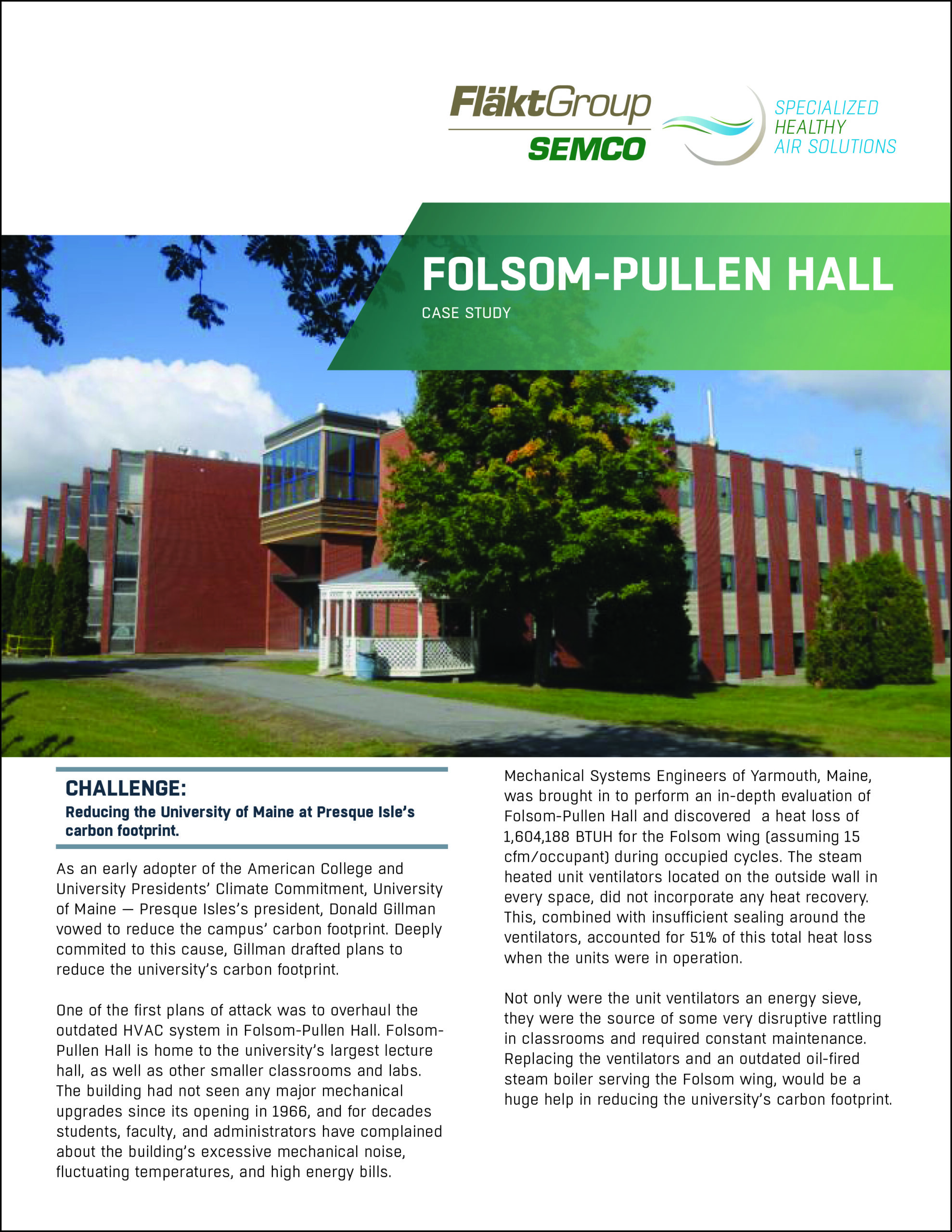
Folsom‑Pullen Hall underwent an HVAC renovation aimed at reducing the University of Maine at Presque Isle’s carbon footprint. Engineers replaced outdated steam unit ventilators and an oil‑fired boiler with an energy recovery ventilator and variable refrigerant flow system. The project resulted in both energy savings and improved comfort.
Key Facts
- Opened in 1966
- Home to the university’s largest lecture hall, smaller classrooms, and labs
- Heat loss identified: 1,604,188 BTUH for the Folsom wing during occupied cycles
- Unit ventilators responsible for 51% of total heat loss
- FV‑5000 energy recovery ventilator installed
- Variable refrigerant flow system added
- True 3Å total energy recovery wheel used
- Outdoor frost protection down to −10°F with added electric preheat coil
- Fuel oil consumption reduced from 55,000 gallons (2007–2008) to 22,000 gallons (2008–2009)
- Carbon footprint reduced by 63%
- Electrical consumption increased by only $5,000 despite transition to mostly electric operation
Challenge
Reducing the University of Maine at Presque Isle’s carbon footprint.
Solution
Engineers selected a combination of a central energy recovery ventilator (FläktGroup SEMCO FV‑5000 with electric preheat coil) and a variable refrigerant flow system. The True 3Å energy recovery wheel provided both sensible and latent energy transfer, while inverter‑based heat pump technology optimized heating and cooling efficiency. The system was supplemented by new oil‑fired boilers during the heating season.
Results
- Fuel consumption reduced from 55,000 gallons to 22,000 gallons
- Carbon footprint reduced by 63%
- Improved indoor comfort and more stable temperatures
- Noise reduction due to decoupled ventilation and reduced ductwork needs
- Electrical consumption increased minimally despite extensive electrification
“The variable refrigerant flow system and the SEMCO system work very well together.”
Kurt Magnusson
Professional Engineer
Mechanical Systems Engineer
Plan your next Education project with healthier, more efficient air.
We help engineers and owners design low-energy, code-compliant systems — backed by real-world results like this case.